
India's pharmaceutical industry is experiencing increased bulk drug prices, particularly for APIs from China, following the escalation of the West Asia crisis in March. While current inventories provide a temporary buffer, concerns are mounting over the availability of key solvents and feedstocks, potentially leading to manufacturing disruptions and shortages in specific drug categories.

Companies are already diversifying sourcing, raising prices, and reworking operating models as the disruption drags on.

Amid controversy over USPresident Donald Trump's comments linking the use of Tylenol and other related paracetamol products by pregnant women to autism in children, experts and industry executives say that since India's export of the drug to the US is less, it will hardly affect the country's pharma exports to America.
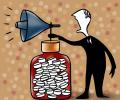
Exports of 13 APIs - including paracetamol, tinidazole, metronidazole, vitamin B1, vitamin B6, vitamin B12, acyclovir, progesterone - along with formulations made from these APIs, would be restricted.

'The world over, everybody is asking for the same medicines, same APIs, same KSMs.' 'However, there is just one supplier -- China -- for the entire world.'

Among the commonly used analgesic formulations (painkillers) found NSQ are combinations of paracetamol with ibuprofen, diclofenac and mefenamic acid. Medications using these combinations are commonly used to treat fever, mild migraine, period and muscle pain.
A leading exporter said, there is enough stock of paracetamol in the country. At present, the US, which has become the epicentre of the COVID-19 outbreak, needs paracetamol. He further said India would lose its credibility as the "pharmacy of the world" if it adopts protectionist policies during such a crisis.

The API of Paracetamol, a fever and pain medication, has grown 25 per cent from Rs 450-480 per kg in December 2020 to Rs 580-600 per kg in April. When compared to the pre-Covid prices of December 2019, the surge is much steeper -- around 140 per cent, reports Sohini Das.

'There is no shortage of any APIs (active pharmaceutical ingredients) in the country'
India lost its competitive advantage as China gave fiscal benefits to its local manufacturers. Besides, recent policy flip-flops have, however, dented India's image as the 'pharmacy of the world'.
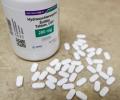
Indian Council of Medical Research had also recommended the use of hydroxychloroquine for treating healthcare workers handling suspected or confirmed coronavirus cases and also the asymptomatic household contacts of the lab-confirmed cases.

Big pharma companies, however, said while it was true that formulation players would not rush to buy raw material, they could not afford losing customers.

As fear grips the world, demand for protective gear used by health care professionals and citizens is on a rise. And, supply disruption from China has opened a window of opportunities for Indian medical device makers.

The government said that "in exercise of extraordinary powers in public interest, conferred by paragraph 19 of the DPCO, 2013", the ceiling prices of 21 key formulations had been increased. These formulations include common medicines like BCG vaccines, penicillin, malaria and leprosy medicines (Dapsone), life-saving drugs like Furosemide (used to treat fluid build-up due to heart failure, liver scarring, or kidney disease), vitamin C, some common antibiotics, and anti-allergy medicines.
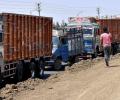
With the government asking the companies to operate with only 50 per cent staff strength, and exports dipping to almost zero, the truck and bus drivers idling at the petrol pump say they hardly have any work now. At a petrol pump on the deserted Bavla-Changodar highway near Ahmedabad in Gujarat, several trucks and buses are neatly parked in a row.
